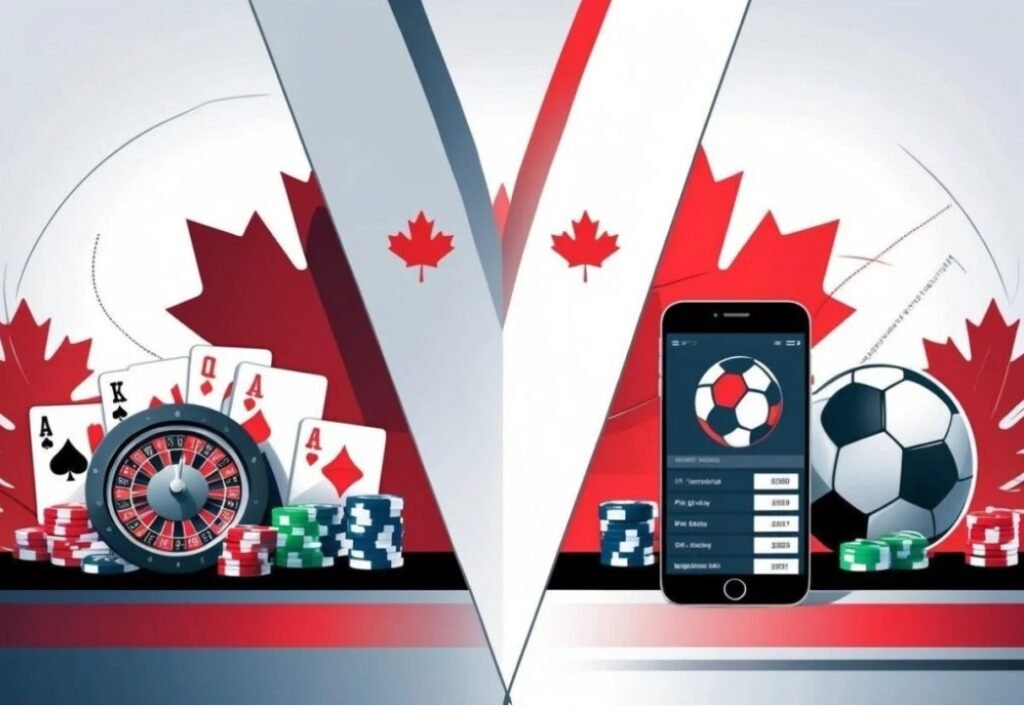

Casino gaming and sports betting have long existed as separate activities in Canada, but the line between them is becoming increasingly difficult to define. In 2025 and into 2026, technological advances and evolving regulations have created hybrid platforms where you can seamlessly switch between placing a wager on an NHL game and spinning slot reels, all within a single account. This shift is reshaping how Canadians engage with gambling and raising important questions about player experience, market growth, and responsible play.
You might wonder whether these two forms of gambling are truly merging or simply coexisting on the same digital platforms. The answer involves understanding how they differ in mechanics and strategy, how provincial regulations treat each activity, and what this convergence means for your entertainment choices. Canada’s online gaming industry generated $19.31 billion in revenue across casino and sports betting in 2025, reflecting strong demand for both offerings.
This article examines the distinctions and overlaps between casino gaming and sports betting, explores the legal landscape across Canadian provinces, and looks at how player behaviour and emerging trends are shaping the future of gambling in the country. Whether you’re a casual player or someone curious about the industry’s direction, understanding these dynamics will help you navigate the changing gambling scene with clarity.
Key Differences and Overlaps Between Casino Gaming and Sports Betting
Casino games and sports betting operate on distinct mechanics yet share common ground in odds-based entertainment and digital delivery. The house edge differs significantly between slots and sportsbook wagering, while modern betting apps increasingly merge both experiences into unified platforms.
Core Concepts: Skill, Odds, and House Edge
Casino games rely heavily on random number generation and fixed mathematical advantages. Slots typically feature an RTP between 94% and 97%, meaning the house retains 3% to 6% of all wagers over time. Table games like blackjack and roulette offer better odds, with blackjack providing an RTP near 99% when you play with basic strategy.
Sports betting operates differently. The house edge in online sports betting averages around 5%, built into the odds rather than the game mechanics. You can analyze team statistics, player performance, and historical data to make informed decisions. This analytical component distinguishes sports betting from the predominantly luck-based nature of slots and roulette.
Key distinctions in game mechanics:
- Casino games use algorithms for instant, predetermined outcomes
- Sports betting depends on real-world events and their unpredictable results
- Blackjack and poker involve strategic decision-making within fixed rules
- Betting markets allow you to assess value based on research and knowledge
Variety of Betting Markets and Game Types
Online casinos offer hundreds of slot titles, multiple variations of table games, and live dealer experiences. Each game type provides a different pace and style of play. Slots deliver quick, repetitive action with minimal decision-making required between spins.
Sports betting presents an expanding range of betting markets. You can place standard wagers on game outcomes or explore in-play betting options that shift as events unfold. In-game wagers allow you to respond to live developments, creating a dynamic experience that casino games don’t replicate.
The variety extends to mobile wagering platforms. Sportsbook sections now include dozens of sports and hundreds of markets per event. You might bet on total points, individual player performance, or specific game situations. This depth of choice mirrors the extensive game libraries that online casinos maintain, though the underlying mechanics remain fundamentally different.
Technological Convergence of Platforms and Apps
Modern betting apps frequently combine casino games and sports betting under one account. The same platform that processes your blackjack hand also handles your hockey wager. This integration uses shared payment systems, user verification, and security protocols.
Mobile wagering technology has made switching between casino and sportsbook sections seamless. You access both through identical interfaces with similar navigation patterns. Live updates, real-time odds adjustments, and instant bet placement work the same way whether you’re playing roulette or placing in-play betting wagers.
The technological foundation supports both iGaming categories without requiring separate registrations or apps. Canadian operators leverage this efficiency to offer comprehensive entertainment options. Your betting history, account balance, and promotional offers exist in one centralized system that serves both casino gaming and sports betting equally.
Legal and Regulatory Framework Across Canada
Canada’s gambling landscape operates under a dual system where federal law sets broad parameters while provincial governments manage day-to-day operations. Bill C-218 fundamentally changed sports betting nationwide, though provinces implement these rules differently through their own regulatory bodies.
Provincial and Federal Laws Shaping Gambling in Canada
The Criminal Code of Canada provides the foundation for all gambling regulation through Part VII. Section 207 grants provinces and territories the authority to conduct and manage gaming activities within their borders, creating a decentralized system where each jurisdiction develops its own rules.
You’ll find that gambling in Canada varies significantly by province. The legal gambling age differs across regions, with Alberta, Manitoba, and Quebec setting it at 18 years old, while Ontario requires you to be 19 for casino games and online sports betting. This provincial control extends to licensing, operational standards, and enforcement.
Each province determines which gambling activities to permit and how to regulate them. Some provinces like Ontario have embraced comprehensive online gambling frameworks, while others maintain more restrictive approaches focused primarily on government-operated platforms.
Safe and Regulated Sports Betting Act and Bill C-218
Bill C-218, officially known as the Safe and Regulated Sports Betting Act, received royal assent on 29 June 2021. This legislation amended the Criminal Code to allow single-event sports betting, replacing the previous requirement for parlay bets involving multiple events.
The change empowered provincial governments to license and regulate sportsbook operations. Before this amendment, billions of dollars flowed to offshore and illegal operators because Canadians couldn’t legally bet on individual games domestically.
Implementation has varied across provinces. Ontario and British Columbia quickly integrated single-event betting into their existing frameworks, while Quebec has adopted a more cautious approach to market expansion.
Role of iGaming Ontario and Regulatory Bodies
iGaming Ontario operates as a subsidiary of the Alcohol and Gaming Commission of Ontario (AGCO), managing the province’s regulated online gambling market that launched in April 2022. Ontario remains the only province with a comprehensive regulatory framework allowing private sector operators to provide internet gaming services.
The AGCO oversees licensing, compliance, and enforcement for both online and land-based gambling operations. You must obtain proper authorization from these bodies to operate legally within the province.
Other provinces maintain different regulatory structures. British Columbia uses the British Columbia Lottery Corporation, while Quebec relies on Loto-Québec for government-operated platforms. These bodies ensure operators meet standards for fairness, security, and responsible gambling practices.
Regulatory Clarity and Consumer Trust in the Best Online Casino Canada Market
The majority of the best online casino Canada sites now operate at the intersection of casino gaming and sports betting, shaped by provincial licensing rules and evolving consumer expectations. This convergence highlights how regulation, player protection standards, and unified account systems increasingly define the modern Canadian gambling experience.
Player Engagement, Responsible Gambling, and Emerging Trends
Canadian operators balance player engagement with harm prevention through technology-enabled safeguards, mobile-first platforms, and demographic-specific strategies that reflect provincial regulatory requirements and shifting consumer preferences.
Responsible Gambling, Self-Exclusion, and Player Protection
You’ll find responsible gambling programs integrated into both casino gaming and sports betting platforms across Canada. Self-exclusion tools allow you to voluntarily restrict your access for predetermined periods, with provincial databases preventing cross-platform gambling during exclusion periods.
Modern platforms provide real-time deposit monitoring, session time alerts, and personalized betting limits that you can adjust through account settings. Research shows that approximately 70% of Canadian players consider transparency and responsible gambling tools when selecting platforms.
Employee training programs have become standard practice. Casino staff receive instruction on identifying problem gambling behaviours and referring players to support resources like GameSense, which operates in multiple jurisdictions. Studies indicate that slightly over half of player-facing casino employees actively engage with these programs.
Key protective features you encounter include:
- Mandatory reality checks during extended sessions
- Deposit and loss limits you set before wagering
- Access to self-assessment tools measuring gambling risk
- Links to provincial problem gambling helplines
Innovation: Mobile Wagering, Personalization, and Community Building
Mobile wagering dominates the Canadian iGaming landscape. Betting apps account for the majority of online casino and sports betting activity, with platforms optimized for smartphone and tablet use.
You experience personalized interfaces that adapt to your preferences through AI-driven recommendations. These systems track your game selections and betting patterns to suggest relevant content without compromising responsible gambling protocols.
Live dealer games provide transparency similar to physical casinos through high-definition streaming. You interact with real dealers and other players in real-time, creating community engagement that bridges online and land-based experiences.
Gamification elements like achievement badges and leaderboards enhance your participation. These features transform passive betting into active engagement while maintaining ethical boundaries through integrated spending controls and time management tools.
Canadian Market Insights and Demographic Patterns
Ontario’s 2022 regulated market demonstrates the shift toward licensed operators, which now generate over 60% of provincial online gambling revenue. You benefit from increased consumer protection and fair play guarantees that regulated frameworks mandate.
Provincial variations shape your experience significantly. British Columbia, Ontario, and Quebec maintain distinct regulatory approaches that influence available platforms, payment methods, and responsible gambling requirements.
Survey data reveals that nearly 70% of Canadian players prioritize platforms offering robust responsible gambling features. Your demographic group influences preferred gaming types, with younger players favouring sports betting and mobile-first experiences while traditional casino games maintain popularity across age groups.
The Canadian Gaming Summit and industry stakeholders track these patterns to inform platform development. You see the results through improved localization options, including Canadian currency support, bilingual interfaces, and region-specific payment integrations that reflect provincial preferences.